About Arachnids
Chelicerates and Arachnids
Scorpions belong to the phylum Arthropoda, subphylum Chelicerata, class Arachnida, and order Scorpiones. Arthropods include insects (Insecta), crustaceans (Crustacea), and myriapods (Myriapoda).
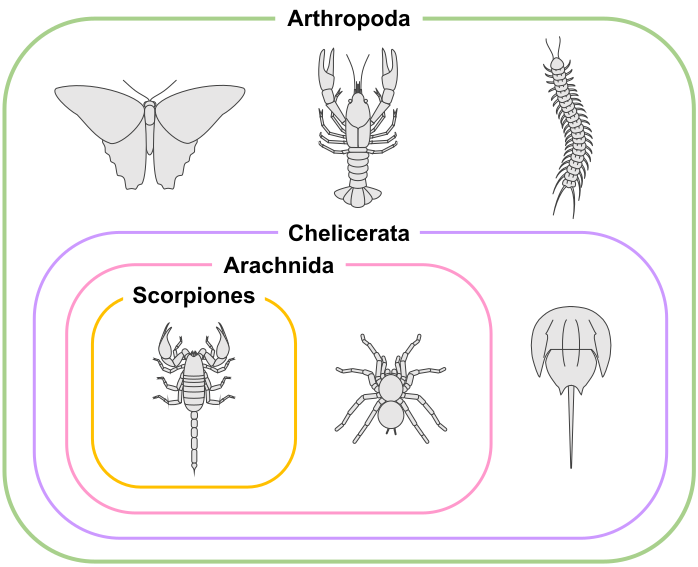
The subphylum Chelicerata comprises animals that possess chelicerae—appendages modified into pincers or fangs. In scorpions, the well-known large pincers are pedipalps, but they also have smaller chelicerae located at the front of the body. In some groups, such as spiders, these chelicerae are fang-shaped rather than pincer-like.
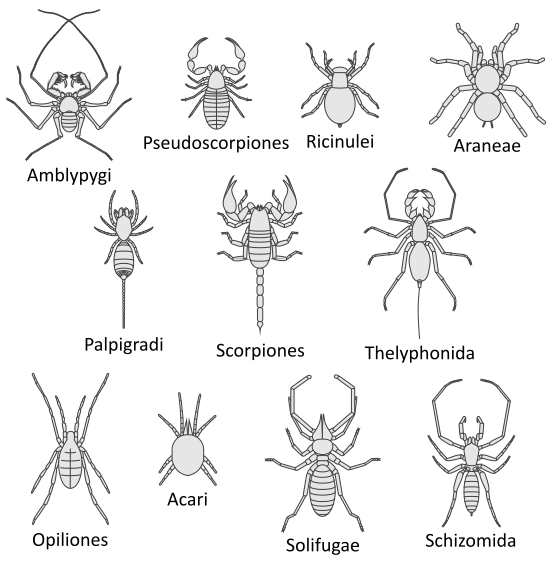
Extant chelicerates are commonly divided into roughly twelve groups (orders): Xiphosura (horseshoe crabs), Scorpiones (scorpions), Araneae (spiders), Acari (mites and ticks; not a single order taxonomically), Opiliones (harvestmen), Pseudoscorpiones (pseudoscorpions), Thelyphonida (whip scorpions), Schizomida (short-tailed whip scorpions), Amblypygi (tailless whip scorpions or whip spiders), Solifugae (camel spiders), Palpigradi (micro whip scorpions), and Ricinulei (hooded tickspiders). Fossil groups such as the eurypterids (sea scorpions) are also known. All terrestrial groups except the marine horseshoe crabs are placed in the class Arachnida.
Morphology of Arachnids
The body of an arachnid is divided into two main parts: the prosoma (cephalothorax), consisting of six segments, and the opisthosoma (abdomen), consisting of twelve segments.
The prosoma is covered dorsally by a carapace, obscuring visible segmentation from above. In contrast, segmentation of the opisthosoma is visible in many groups. In scorpions, the first seven abdominal segments and the posterior five are distinct, referred to as the mesosoma and metasoma, respectively.
Some arachnids have a terminal segment called telson, which varies in form among groups. In horseshoe crabs, a marine chelicerate, it forms a sword-like spine. Among terrestrial arachnids, it may form a venomous sting (in scorpions), a whip-like flagellum (in thelyphonids and palpigrades), or a short tail (in schizomids).
In arachnology, total body length is typically measured from the anterior margin of the prosoma to the posterior end of the opisthosoma, excluding the telson. Thus, the whip-like tails of thelyphonids and palpigrades are not included in total length measurements. For scorpions, however, both conventions—excluding or including the stinger—are used, though including it is more common.
Legs, although long in many arachnids, are not part of the body length. For spiders, an alternative measurement called “leg span” (the total span with legs extended) is often used.
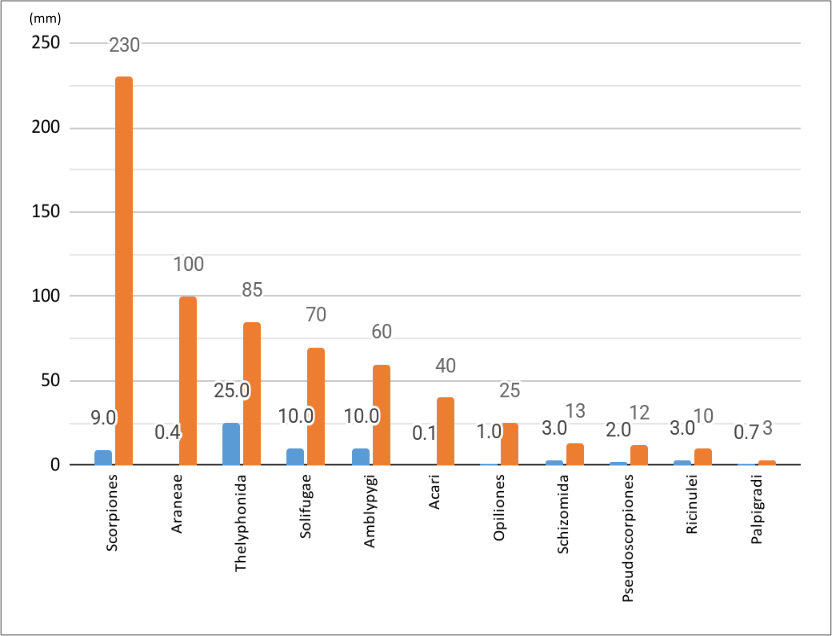
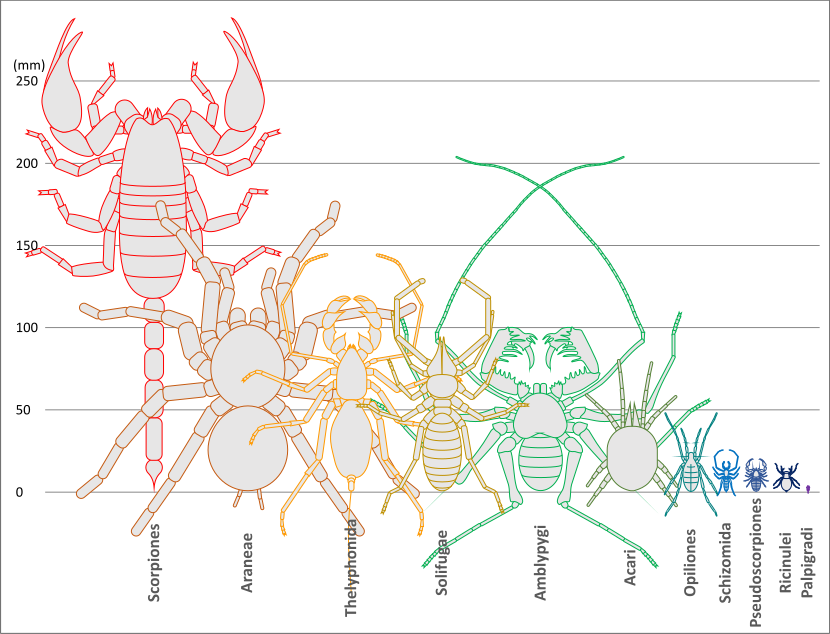
The approximate maximum and minimum body sizes for each order of arachnids are shown in the following figure (Ono, 2008; AAS website; ISA website; Taylor, 2008). Scorpions reach the largest sizes among arachnids—species such as those of the genus Pandinus can exceed 200 mm in length. In contrast, very small species, such as those in Microtityus, measure only about 9–12 mm (Kovařík & Teruel, 2014). Other orders show similar variation, with the smallest species only a few millimeters long.
Below are illustrations comparing the maximum body sizes among various arachnid orders.
Species Diversity and Habitats
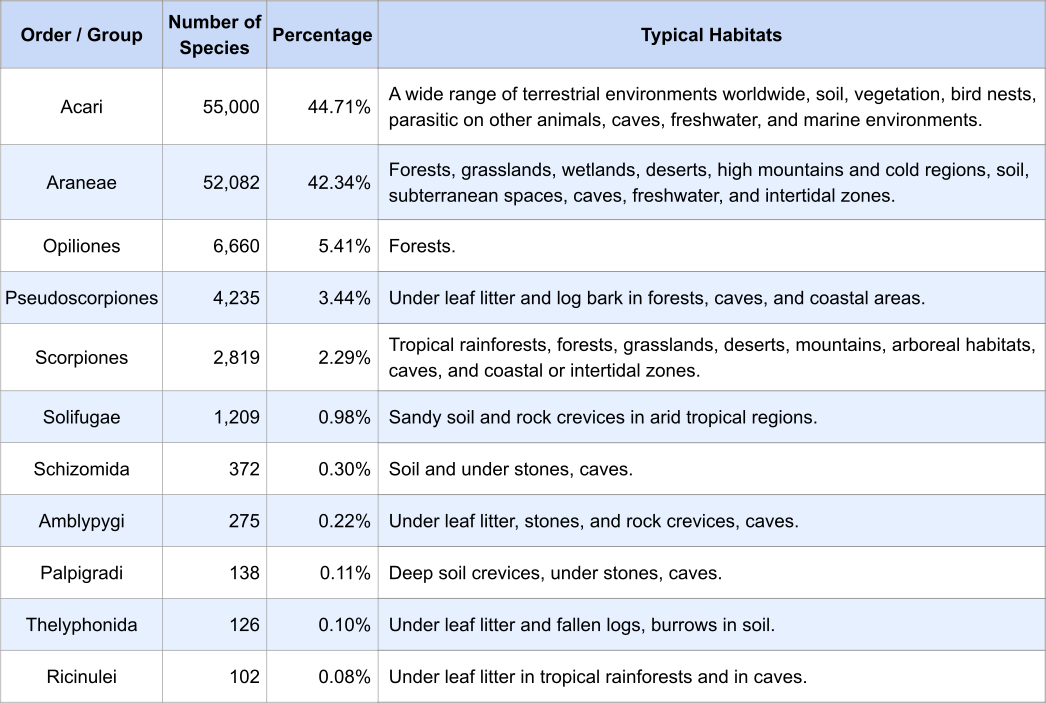
The numbers of described species and representative habitats of each arachnid order are summarized below (WAC website; AAS website; ISA website; Rein, 2017; Ono, 2008).
Arachnids are primarily terrestrial, inhabiting soil, leaf litter, and under stones. However, depending on the group, some species are adapted to high-altitude regions, caves, or even aquatic environments.
Mites and ticks (approximately 45%) and spiders (approximately 42%) together account for about 90% of described arachnid species, reflecting their wide ecological diversity and adaptability.
References ▼
- Ono, H. (2008). Subphylum Chelicerata. In R. Ishikawa (Ed.), Diversity and Evolution of Arthropoda (pp. 410–420). Shokabo.
- American Arachnological Society. (n.d.). “Arachnid Orders.” https://www.americanarachnology.org/about-arachnids/arachnid-orders/ (Accessed April 27, 2024).
- International Society of Arachnology. (n.d.). “Orders of Arachnids.” https://arachnology.org/arachnology/orders.html (Accessed September 13, 2015).
- Taylor, C. (2008). The strangest of spiders. Catalogue of Organisms. http://coo.fieldofscience.com/2008/08/strangest-of-spiders.html.
- Kovařík, F., & Teruel, R. (2014). Three new scorpion species from the Dominican Republic, Greater Antilles (Scorpiones: Buthidae, Scorpionidae). Euscorpius, 187, 1–27.
- Natural History Museum Bern. (n.d.). “World Arachnida Catalog.” https://wac.nmbe.ch/ (Accessed April 29, 2024).
- Rein, J.O. (2017). The Scorpion Files. Trondheim: Norwegian University of Science and Technology. https://www.ntnu.no/ub/scorpion-files/ (Accessed April 29, 2024).