Scorpion Morphology
Body Length
Most adult scorpions range from 40 mm to 100 mm in length. However, their size varies widely depending on the species and taxonomic group. For example, members of the genus Pandinus, including the Emperor Scorpion (Pandinus imperator), can exceed 200 mm, whereas Microtityus minimus measures only about 10 mm (Kovařík & Teruel, 2014).
Dorsal Morphology
Prosoma (Cephalothorax)
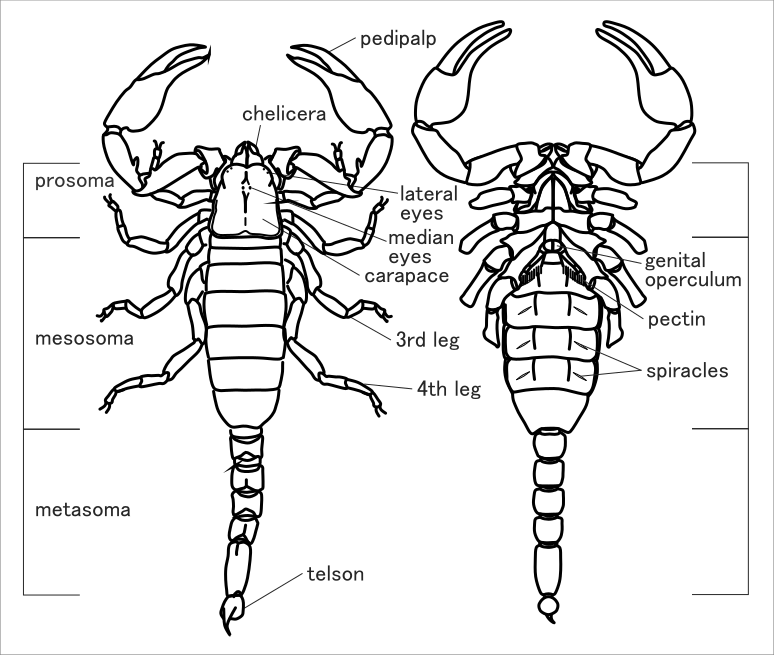
The prosoma consists of six segments. The dorsal surface is covered by the carapace, which bears a pair of median eyes at the center and, depending on the species, two to five pairs of lateral eyes along the anterior margin. On the ventral side of each segment, from front to back, are a pair of chelicerae, a pair of pedipalps, and four pairs of walking legs.
Mesosoma
The mesosoma consists of seven segments, each covered dorsally by a tergite (dorsal plate).
Metasoma
The metasoma, commonly referred to as the “tail,” consists of five segments. Although often considered an appendage, the metasoma actually forms part of the main body, as the digestive tract continues through it and the anus opens between the metasoma and the stinger (telson).
Telson (Stinger, Aculeus)
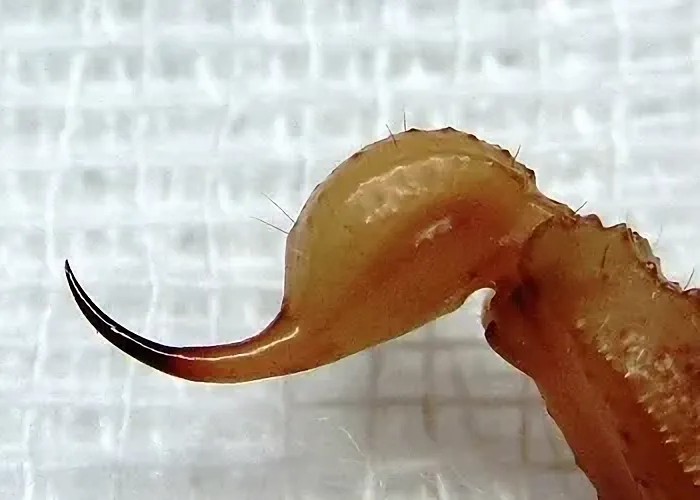
The stinger at the end of the body is called the telson and is often treated as distinct from the other body segments. Some researchers exclude the telson when measuring total body length, defining it instead as the distance from the anterior edge of the carapace (base of the chelicerae) to the fifth metasomal segment.
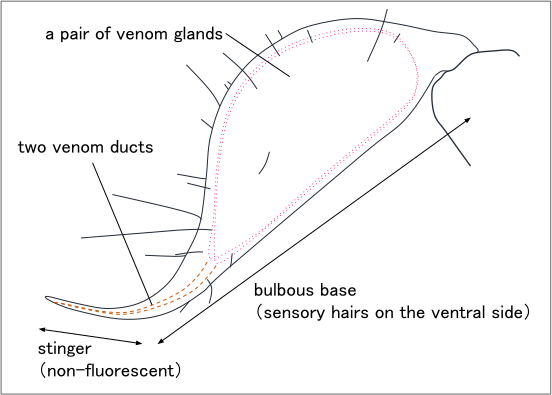
The telson consists of a bulbous section containing a pair of venom glands (Foelix et al., 2014) and a sharp aculeus (stinger). Venom is secreted from the glands and delivered through the aculeus to the injection point at its tip.
Ventral Morphology
Chelicerae
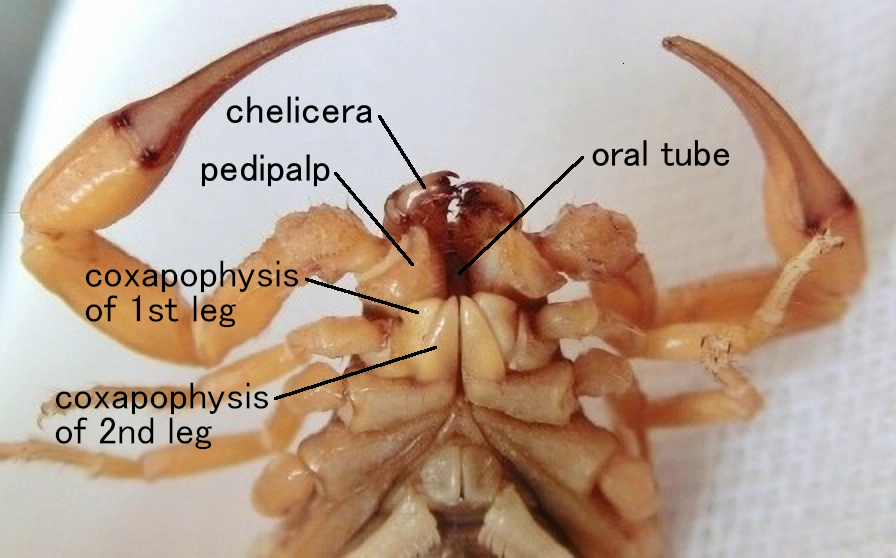
The chelicerae, located on the first segment of the prosoma, are small pincer-like appendages used to tear and macerate prey—functionally similar to jaws or teeth in other animals.
Pedipalps
The pedipalps, situated on the second segment, form the characteristic large pincers used for capturing prey or grasping the female during courtship. Their size and shape vary among species and genera.
1st to 4th Legs
The third to sixth prosomal segments each bear a pair of walking legs (four pairs in total).
Mouthparts
The mouth is located below the chelicerae. The area surrounded by the chelicerae above, the pedipalps on each side, and the coxal lobes (coxapophyses) of the first and second legs below forms a structure known as the “oral tube” or “preoral tube,” which leads to the mouth opening situated deeper within.
Genital Operculum
The genital operculum, located on the first segment of the mesosoma, covers the genital opening (gonopore). In some species, the shape and size of the operculum—heart-shaped, oval, or otherwise—can be used to distinguish males from females.
Pectines
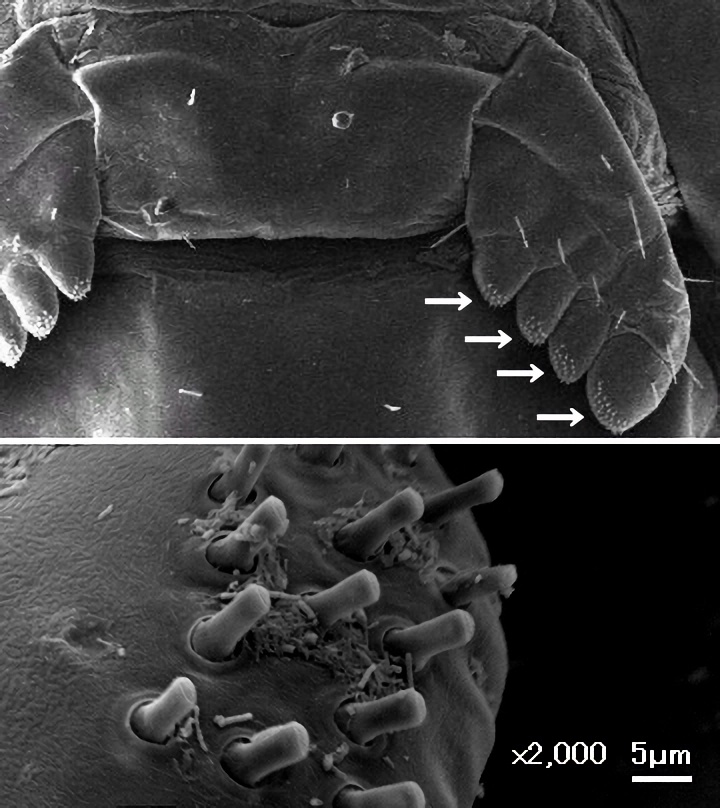
On the second mesosomal segment are the pectines—comb-like sensory organs unique to scorpions. Each “tooth” of a pectine bears numerous peg sensilla, which function as sensory structures. Pectines are believed to detect chemical cues and vibrations, and males use them to locate a suitable site for spermatophore deposition during courtship. Generally, males possess larger pectines with more teeth than females.
Book Lungs
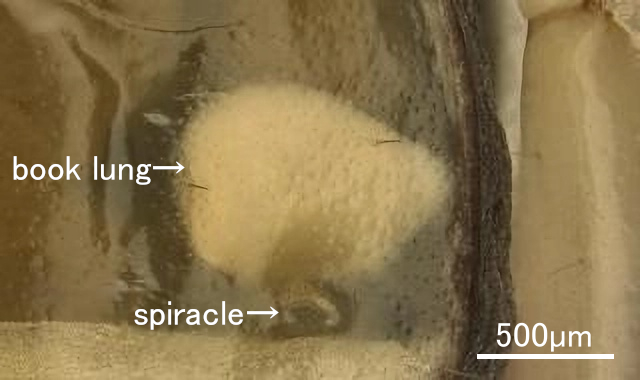
The third to sixth segments of the mesosoma each bear a pair of book lungs, visible as pale openings (spiracles) on the ventral surface.
Differences Between Males and Females
General Morphological Differences
Distinguishing between male and female scorpions can be difficult, as they lack external structures unique to one sex. In particular, juveniles are often impossible to sex reliably. However, subadults and adults often exhibit subtle morphological differences that can be recognized by comparing multiple individuals of the same species.

Three major morphological differences between males and females are commonly noted (Rubio, 2008):
- Females are generally larger and more robust in body shape (Pandinus, Heterometrus).
- Males often have longer metasomas, resulting in greater overall body length (Hadogenes, Centruroides).
- Males possess larger or more elongated pedipalps (Pandinus, Heterometrus, Centruroides, Opistophthalmus).
Pectines
The pectines are one of the most reliable external features for distinguishing the sexes. In most species, males have larger and longer pectines with a greater number of teeth, though some overlap between the sexes may occur. During courtship, males actively move their pectines to locate a suitable site for spermatophore deposition. These behavioral differences may be linked to their morphological differences.
Genital Operculum
In some species, the genital operculum anterior to the pectines also differs between sexes. The operculum covers the genital opening and may vary in shape (oval, rectangular, or heart-shaped) or in the visibility of a central groove. Additionally, in mature males, small posterior projections known as genital papillae are often present (Rubio, 2008).
References ▼
- Kovařík, F., & Teruel, R. (2014). Three new scorpion species from the Dominican Republic, Greater Antilles (Scorpiones: Buthidae, Scorpionidae). Euscorpius, 187, 1–27.
- Foelix, R., Erb, B., & Braunwalder, M. (2014). Fine structure of the stinger (aculeus) in Euscorpius. Journal of Arachnology, 42(1), 119–122.
- Rubio, M.S. (2008). Scorpions: Everything About Purchase, Care, Feeding, and Housing (Complete Pet Owner’s Manual). Barron’s Educational Series.